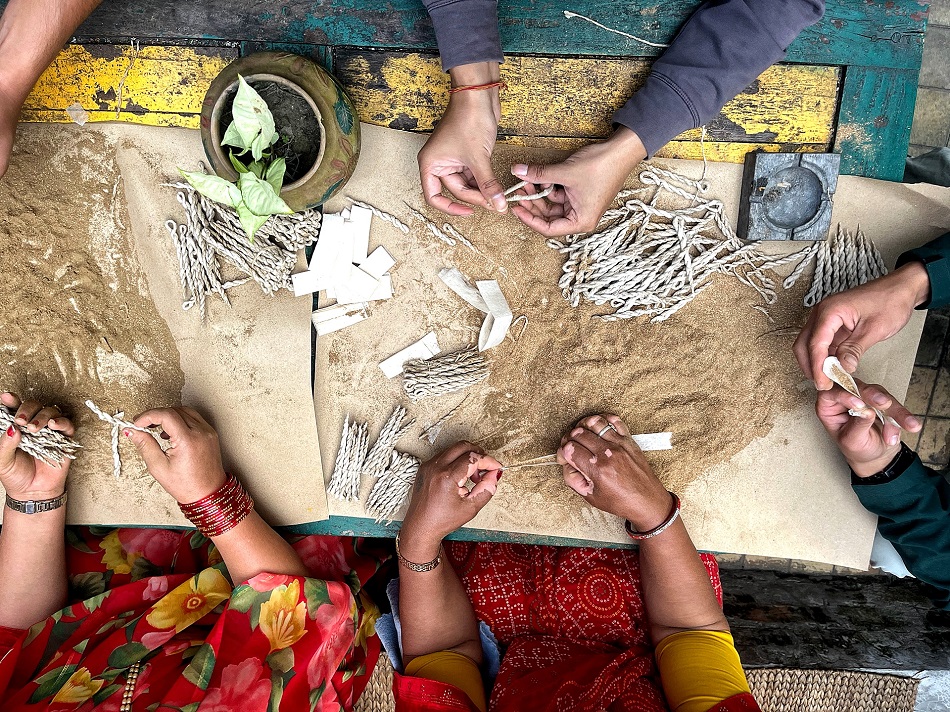


Patan/ Baateko Dhoop, a traditional Nepali herbal incense, is valued for its pure, health-supportive properties and cultural significance. Made from native herbs and woods sourced from high-altitude regions, Baateko Dhoop offers a natural alternative to synthetic incense. It has long been believed to aid respiratory health and maintain physical balance when its smoke is moderately inhaled, making it not only a healthier option but a meaningful symbol of Nepal’s cultural heritage.
In recent years, however, Nepal has grown increasingly dependent on imported incense products. In 2023 alone, over 3,100 tonnes of incense, costing the nation 21 crore rupees, were imported. These foreign products often contain synthetic chemicals, petroleum derivatives, and artificial fragrances—substances linked to various health risks, including respiratory issues and even cancer. As imported incense becomes more widespread in Nepali homes, concerns about its health impacts have driven a renewed interest in traditional, locally made incense options like Baateko Dhoop.
In response, young Nepalis are embracing their heritage and local products, seeing the value in promoting safe, sustainable practices that benefit the economy and preserve culture. To encourage this shift, a youth-led cultural group, MOHEE, recently hosted a workshop called “Learn with Aama” in collaboration with Chiyawala tea house. Held in Bakhundole, this workshop brought together young people in Kathmandu to learn Baateko Dhoop-making directly from elder women, or “aama,” who shared their skills and knowledge, bridging generations through cultural practice.
Event organizer Srijan Thapa emphasized the importance of these traditions, stating, “In the Vedic period, herbal smoke was used medicinally. Today, Baateko Dhoop carries that legacy forward, promoting health and well-being through its natural ingredients.” “Importing synthetic products only detracts from our cultural identity,” added Anil Ranjit.“Our cultural practices are the most sustainable legacy we have. They represent our identity, and we should actively promote them.”
A participant talked about the workshop’s significance: “Events like these not only revive traditional skills but also empower our youth to take pride in our culture and natural resources. By learning to make Baateko Dhoop, we are reclaiming our heritage and ensuring its survival for future generations.”
The therapeutic benefits of Baateko Dhoop trace back to the Vedic era when herbal smoke was used for its medicinal properties. During that time, if oral medication was not possible, herbal smoke was inhaled to restore balance and support health. Such practices highlight the enduring relevance of Baateko Dhoop, particularly as awareness grows about the risks associated with synthetic alternatives.